
Sick child nutrition can feel confusing because illness changes the way children eat, drink, and respond to familiar foods. A parent may worry when a child refuses dinner, asks only for liquids, or eats much less than usual. During many mild illnesses, appetite often decreases temporarily. The focus may need to shift from normal meals to hydration, comfort, and small tolerated foods. A practical pediatric nutrition routine helps parents stay calm. Food support should match symptoms, age, and medical guidance. The goal is care, not pressure.
Sick Child Nutrition starts with observation because symptoms guide the feeding approach. A child with a sore throat may need soft foods. A child with stomach upset may need bland options. A child with fever may need extra fluids. A helpful symptom-based feeding plan asks what the child can tolerate right now. Watch energy, urination, tears, mouth moisture, and behavior. These clues matter. They help parents decide whether home support seems reasonable or medical advice is needed. Observation reduces guessing and fear.
Sick Child Nutrition should prioritize hydration when intake drops. Fluids may matter more than solid food during short periods of low appetite. A practical hydration support plan uses small, frequent sips. Children may tolerate little amounts better than large cups. Follow pediatric guidance for oral rehydration options, especially with vomiting or diarrhea. Babies, toddlers, and children with medical conditions need extra caution. Hydration is not glamorous, but it is central to sick-day care. Parents should seek help when dehydration signs appear.
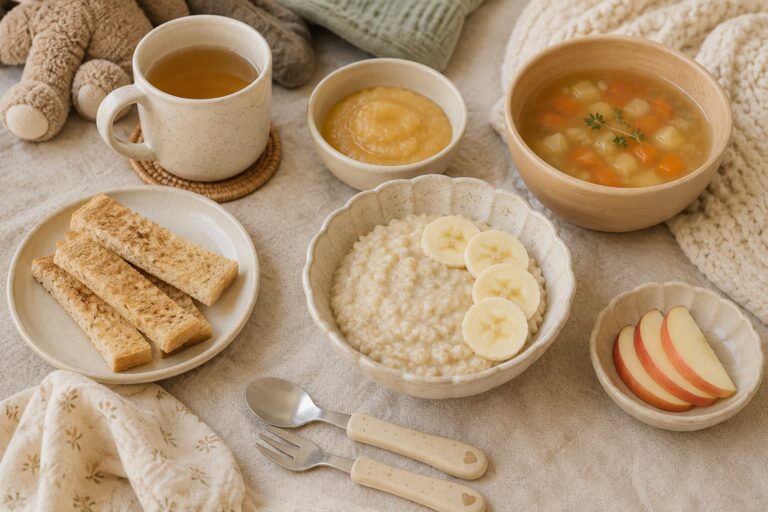
Comfort foods during illness should be gentle, familiar, and easy to manage. Think about texture, smell, temperature, and effort. A useful soft food strategy may include soups, smoothies, yogurt, oatmeal, mashed foods, crackers, or rice, depending on symptoms and age. Some children prefer cold foods with sore throats. Others prefer warm broth. There is no single perfect sick-day menu. The best choice is the one the child can tolerate safely and calmly.
Sick Child Nutrition becomes harder when every bite feels like a test. Parents may worry that not eating enough will slow recovery. That concern is understandable. A supportive low-pressure feeding method helps protect the relationship around food. Offer, encourage gently, and let the child stop. Avoid bargaining, shaming, or turning meals into emotional negotiations. Appetite usually improves as the illness improves. If it does not, or symptoms worry you, contact a pediatric professional. Calm feeding supports both nutrition and trust.
Sick Child Nutrition during recovery should build gradually. A child may eat small portions at first, then request more variety later. A thoughtful post-illness meal plan adds protein, fruits, grains, and regular textures as tolerated. Keep portions modest. Let the body catch up. Avoid making up for missed meals with pressure. Recovery eating works best when it feels steady. Parents can offer nourishing choices while respecting appetite changes. That balance helps children return to normal routines with less resistance.
Sick-day food should help the child feel cared for. It should not become another source of conflict. For practical feeding adjustments, read the Feeding a Sick Child article. For simple options, continue with the Gentle Foods for Kids article. For fluid-focused support, explore the Hydration When Child Is Sick article. The How to Adjust Feeding When Your Child Is Sick resource helps parents respond with more confidence.



Leave a comment