
Feeding a sick child can feel worrying when familiar meals are refused and routines suddenly change. Illness often affects appetite, taste, energy, digestion, and patience. Parents may feel pressure to make the child eat normally, but the body may need gentler support for a short time. A calm approach focuses on hydration, comfort, small portions, and signs that require medical advice. A practical sick-day nutrition plan helps parents respond without panic. Food still matters, but forcing meals can create more stress. Gentle support often works better than pressure.
Feeding a Sick Child requires flexibility because illness changes what the body can handle. A usual favorite may suddenly feel too strong, too heavy, or too tiring to chew. A helpful pediatric feeding support approach focuses on tolerance. Offer smaller portions more often. Keep choices bland, soft, or familiar when needed. Watch energy and hydration closely. Appetite often returns gradually. Parents do not need to win every meal. They need to support recovery while noticing when symptoms need professional care.
Feeding a Sick Child should begin with hydration because fluids often matter most during illness. Fever, vomiting, diarrhea, sweating, or reduced intake can increase fluid needs. A practical child hydration routine offers small sips regularly instead of large amounts at once. Water, oral rehydration solutions, broth, or doctor-approved options may help depending on symptoms and age. Parents should follow pediatric guidance for babies and specific medical concerns. Hydration can feel less dramatic than meals, but it is often the first priority.
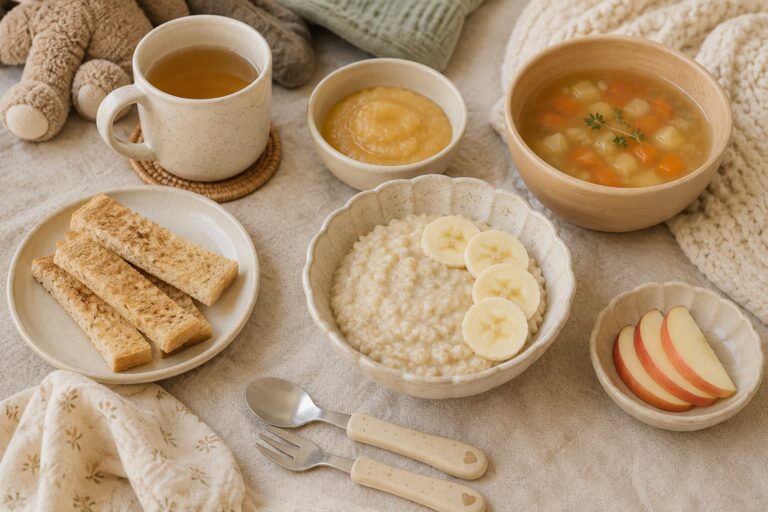
Small portions reduce pressure and help children feel more in control. A few bites may be more realistic than a full plate. A supportive gentle meal adjustment might include toast, applesauce, rice, banana, soup, oatmeal, yogurt, or other tolerated foods. The right choice depends on symptoms, age, allergies, and medical advice. Keep the tone calm. Praise effort without making food a battle. Sick children may need reassurance more than variety. The goal is nourishment that feels possible.
Feeding a Sick Child without battles means separating care from control. Parents naturally worry, but pressure can make eating harder. A useful family wellness routine offers food gently and lets the child stop when needed. Try quiet settings, smaller dishes, and neutral language. Avoid turning every bite into a negotiation. If a child refuses food but drinks adequately, monitor and keep offering. If symptoms are concerning, seek medical guidance. Calm feeding helps the child trust their body while still receiving support.
Feeding a Sick Child during recovery requires patience because appetite may return slowly. A child may accept small meals before returning to normal portions. A thoughtful recovery feeding plan reintroduces familiar foods gradually. Start with gentle options, then add more texture, protein, and variety as energy improves. Avoid rushing rich or heavy foods if digestion still seems sensitive. Recovery is a transition. The body may need time to rebuild normal hunger cues. Parents can support that process with steady, low-pressure offerings.
Feeding advice changes when symptoms are severe, prolonged, or unusual. Parents should contact a pediatric professional for dehydration signs, breathing concerns, persistent vomiting, high fever, or worrying behavior. For broader nutrition support, read the Sick Child Nutrition article. For easy foods during recovery, continue with the Gentle Foods for Kids article. The How to Adjust Feeding When Your Child Is Sick resource helps parents make calmer food choices during stressful sick days.



Leave a comment