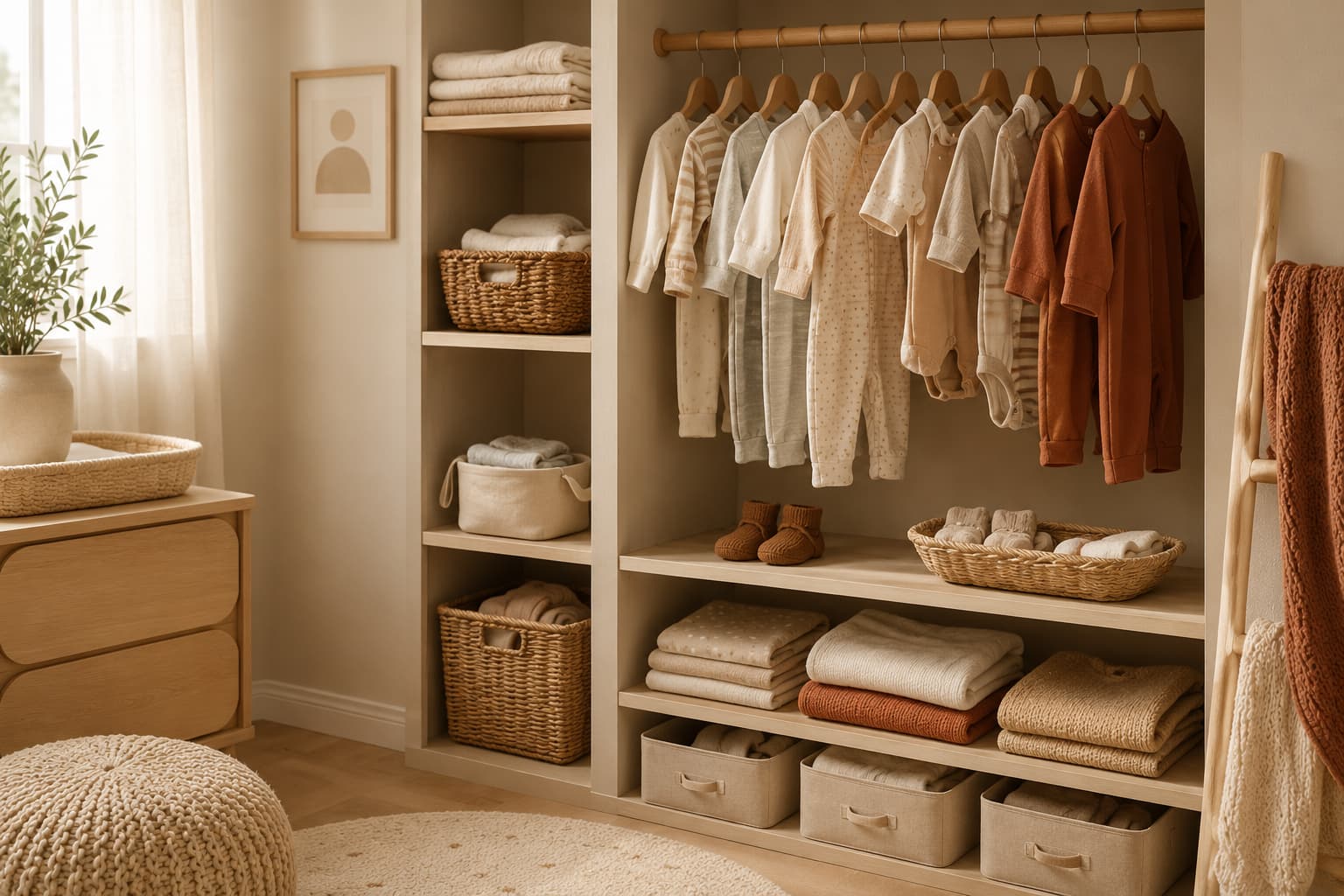
Affordable baby wardrobe planning can reduce stress during a season when families already manage many new decisions. Baby clothes should support comfort, quick changes, easy laundry, and growth. They should not create financial pressure or overflowing drawers. A smarter wardrobe starts with what babies actually need day to day. Parents can still enjoy sweet outfits, soft colors, and charming details. They simply need a structure that keeps buying under control. A thoughtful budget baby fashion plan helps make clothing choices calmer. It also keeps the closet useful as the baby changes size.
Affordable Baby Wardrobe planning helps because baby clothing needs change quickly. A drawer that feels perfect this month may be too small next month. A useful baby wardrobe checklist focuses on flexible essentials instead of constant new purchases. Think in categories rather than outfits. Sleep, play, travel, layering, and weather all need coverage. Special occasion pieces can stay limited. This approach helps parents avoid buying for imaginary needs. It also keeps money available for items that matter more, such as diapers, feeding supplies, and daily care basics.
Affordable Baby Wardrobe success begins with reliable basics. Soft bodysuits, sleepers, pants, socks, bibs, and simple layers cover most daily situations. A practical baby clothes essentials strategy helps parents choose pieces that can be mixed easily. Avoid complicated fastenings for everyday wear. Choose fabrics that tolerate frequent washing. Keep colors coordinated enough to simplify dressing. Basics make the wardrobe work harder. They also reduce the need for extra pieces because outfits come together faster.
Tiny sizes are adorable, but they may have the shortest lifespan. Some babies wear newborn sizes briefly. Others move into larger sizes almost immediately. A smart newborn clothing budget keeps early purchases modest. Save receipts when possible. Accept hand-me-downs selectively. Buy more after you understand the baby’s growth and laundry rhythm. This prevents drawers full of unworn outfits. It also reduces guilt. Babies do not need a huge wardrobe. They need comfortable pieces that match their actual size and season.
Affordable Baby Wardrobe building becomes easier when hand-me-downs are handled intentionally. Accept useful pieces, but do not feel obligated to keep everything. A helpful hand-me-down system sorts clothes by size, season, condition, and practicality. Keep what fits your needs. Pass along what does not. This prevents free clothing from becoming clutter. Hand-me-downs are most valuable when they support the wardrobe plan. They should reduce pressure, not add piles of decisions to an already busy home.
Affordable Baby Wardrobe choices can still feel stylish. Choose a simple color palette, soft textures, and a few charming details. A thoughtful capsule baby wardrobe makes even basic pieces look coordinated. Cream, gray, sage, denim, oatmeal, navy, and soft prints can mix easily. Add personality through hats, cardigans, bibs, or blankets. Style does not require constant buying. It comes from consistency and smart pairing. A smaller wardrobe can look sweeter when the pieces belong together.
Review sizes every few weeks and move outgrown pieces quickly. Store favorites, donate extras, and list what is actually missing. For budget shopping basics, read the Baby Clothes on a Budget article. For eco-minded choices, continue with the Sustainable Baby Clothing Tips article. The Smart Baby Style on a Budget resource helps parents build a baby wardrobe that feels practical, cute, and affordable.



Leave a comment